Snoop Dogg’s Son Cordell Wears Women Clothing & Makeup, Responds To Critics
Reframing Masculinity in a Time of Confusion
Once upon a time, distinctions between men’s and women’s clothing helped anchor societal roles and expectations. Today, those lines have not only blurred—they’ve all but disappeared. In a world where women are praised for wearing pantsuits and men are celebrated for donning skirts, one has to ask: is this progress—or confusion dressed as creativity?
The 2020 Academy Awards offered a striking image of this shift when award-winning performer Billy Porter appeared on the red carpet in a dramatic skirted ensemble. It was hailed as bold and progressive, but was it really about fashion—or was it part of a broader effort to challenge and redefine masculinity altogether?
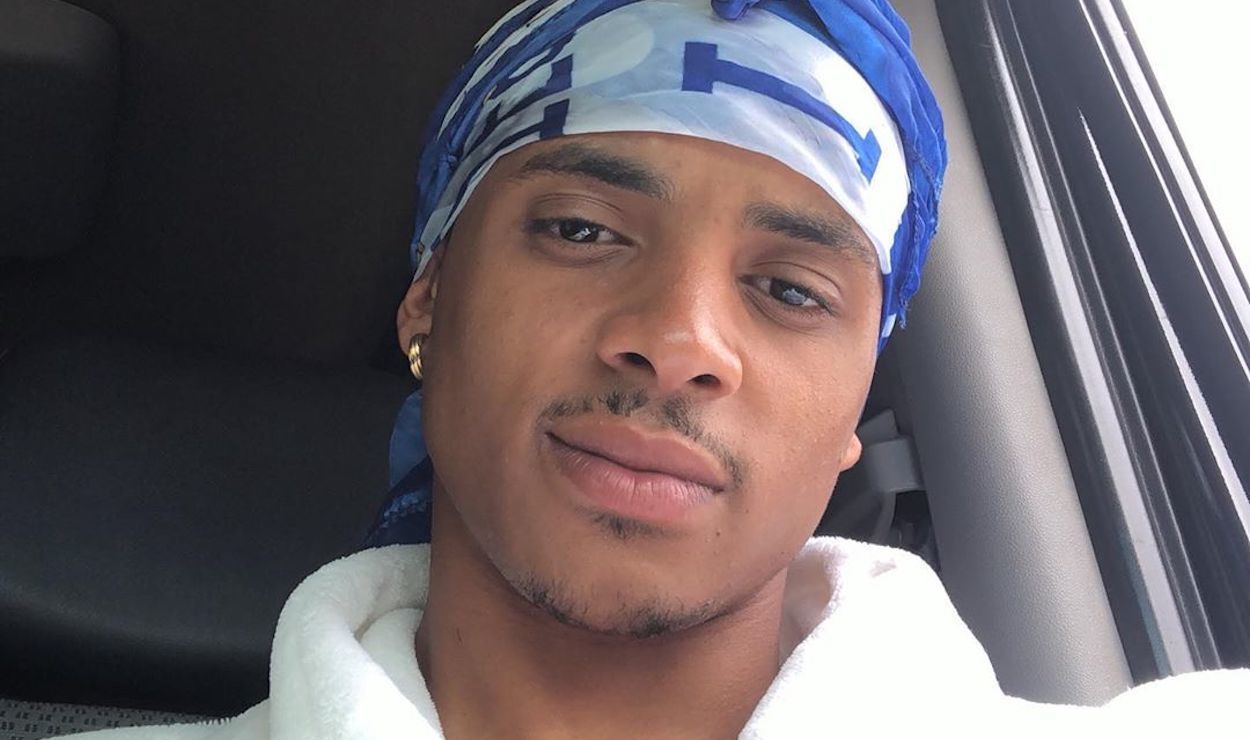
More recently, Cordell Broadus—son of legendary rapper Snoop Dogg—has stepped into similar territory. Known in his younger years for his athleticism, Cordell once played football for UCLA, earning a scholarship thanks to his high school performance. But even then, he admitted that he pursued the sport not out of passion, but to win the approval of his father, the iconic figure of West Coast rap. “It took me 12 years to realize he loves Cordell Broadus the person, not the football player,” he said.
Since stepping away from the gridiron, Cordell has entered the fashion world, debuting with MCM Worldwide and embracing a look that seems to depart from the masculine archetype his father embodied. Some applaud this as self-expression. Others see it as the erasure of what it means to be a man.
To be clear, this isn’t about clothing preferences—it’s about the underlying messaging. When media platforms elevate men in dresses as symbols of freedom or progress, while dismissing traditional masculinity as outdated or toxic, we need to pause and ask: Who is pushing this, and why?
Masculinity doesn't need to be performative, but it also doesn't need to be erased. In our rush to be inclusive, let’s not forget that honoring biological differences and traditional roles doesn’t mean rejecting individuality—it means protecting the integrity of identity.
It’s easy to dismiss criticism of Cordell Broadus’ recent fashion shoot as mere homophobia—but that oversimplifies a much deeper cultural concern. The backlash isn’t necessarily rooted in hate; for many, it reflects discomfort with the ongoing erosion of traditional masculinity.
Wearing eyeliner, earrings, or pink clothing isn’t inherently wrong—but when such choices are paraded as revolutionary or used to redefine manhood, people naturally push back. This isn’t about bigotry; it’s about identity. Masculinity—like femininity—has distinct traits, and many feel those traits are being intentionally diluted in pop culture under the guise of progress.
Criticism doesn't always equal phobia. Sometimes, it's a call to preserve the value of time-tested roles that have anchored families and societies for generations. That conversation deserves space—without being automatically dismissed as hate.It’s not the earrings, eyeliner, or pink clothing alone that spark concern—it's the message those choices are wrapped in: that masculinity must now conform to fluidity to be accepted. People have the right to question that narrative without being branded as hateful. Not every critique is rooted in bigotry—some are rooted in a desire to preserve identity, structure, and meaning in an increasingly confused culture.ure, nd meaning an increasingly confused culture. While many applaud Cordell with sentiments like “you keep doing you,” we must ask—at what cultural cost? Personal expression is one thing, but when public figures shift the image of manhood so dramatically, it affects more than just fashion—it reshapes expectations for a whole generation.
Being true to oneself is important—but so is understanding the responsibility that comes with influence. Expression should uplift identity, not blur it beyond recognition.
Y'all don't hear me thought!
- This is Willy Bill of B-13 Peer Review
I know some of you are mainstream media zeitgeists and outlets coming here to get your talking points. It's ok I'm not upset I want this info out there no matter who it comes from. All I ask is that you give me credit for my hard work.
If you have celebrity news, political news, or if you are an artist or entertainer and want to share your thoughts or story contact us.
PLEASE LIKE SHARE, FOLLOW, COMMENT BELOW & JOIN US (Subscribe) :


Comments
Post a Comment